Table of Contents Reference SheetMemrise CourseWhat are Post Verbal Intensifiers?Completely UnrestrictedZUJ ZUSTAS ZOGUA LUAJKIAGRestrictedDHEEVHLOLUGNKAUSNKOOSNPLAWG NTIANRAIMNREESNRUJ NRISNRHONTAISNTHAVNTHAWV NTHAVNTSOOVNTSUAVNTXHIASPAWG LUGPLAWSPLUJ PLAWSPLHUAVQEESQUJ QEESRAWVRHETAWG NTHOZOJZOM ZAWS Download PVI Reference Sheet PVI-Reference-Sheet.pdfDownload PDF Memrise Course Memrise Course: PVI Click the above button to go to the Memrise.com card pack created to help you memorize the Post Verbal Intensifiers taught in … Read More
PDF: Post Verbal Intensifiers Reference Sheet
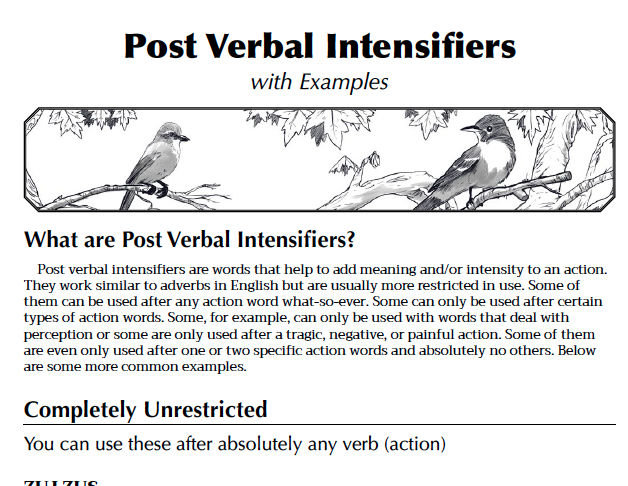
What is this reference sheet? The post verbal intensifier reference sheet is a thoroughly researched list of common post verbal intensifiers in Hmong. It includes an introductory explanation of what post verbal intensifiers are and many reference examples to help clarify the meaning of each word. Download Here
Hmong Tone Change – The D Tone for Direction Words
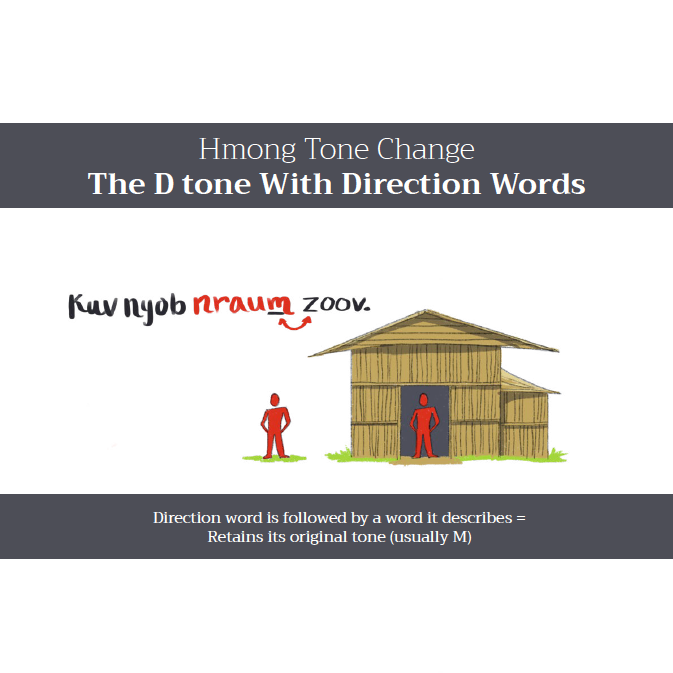
Hmong Tone Change – The D Tone for Direction Words Cheatsheet/ Worksheet Worksheet-Cheat-SheetDownload PDF Tone change is something that happens a lot in Hmong. While it is true that most tone change in Hmong takes place due to the tone of the previous word, the ‘D’ tone is a special case. When you see the … Read More
Action – Object – Modifier in Hmong

Often in English when we talk about an action we add modifying words to that action to show in what manner it was completed. For example, if you say, ‘kick him’ it has one meaning, but if you say, ‘kick him out‘ it has an entirely different meaning because of that modifier ‘out.’ A few more examples are: Stand up. … Read More