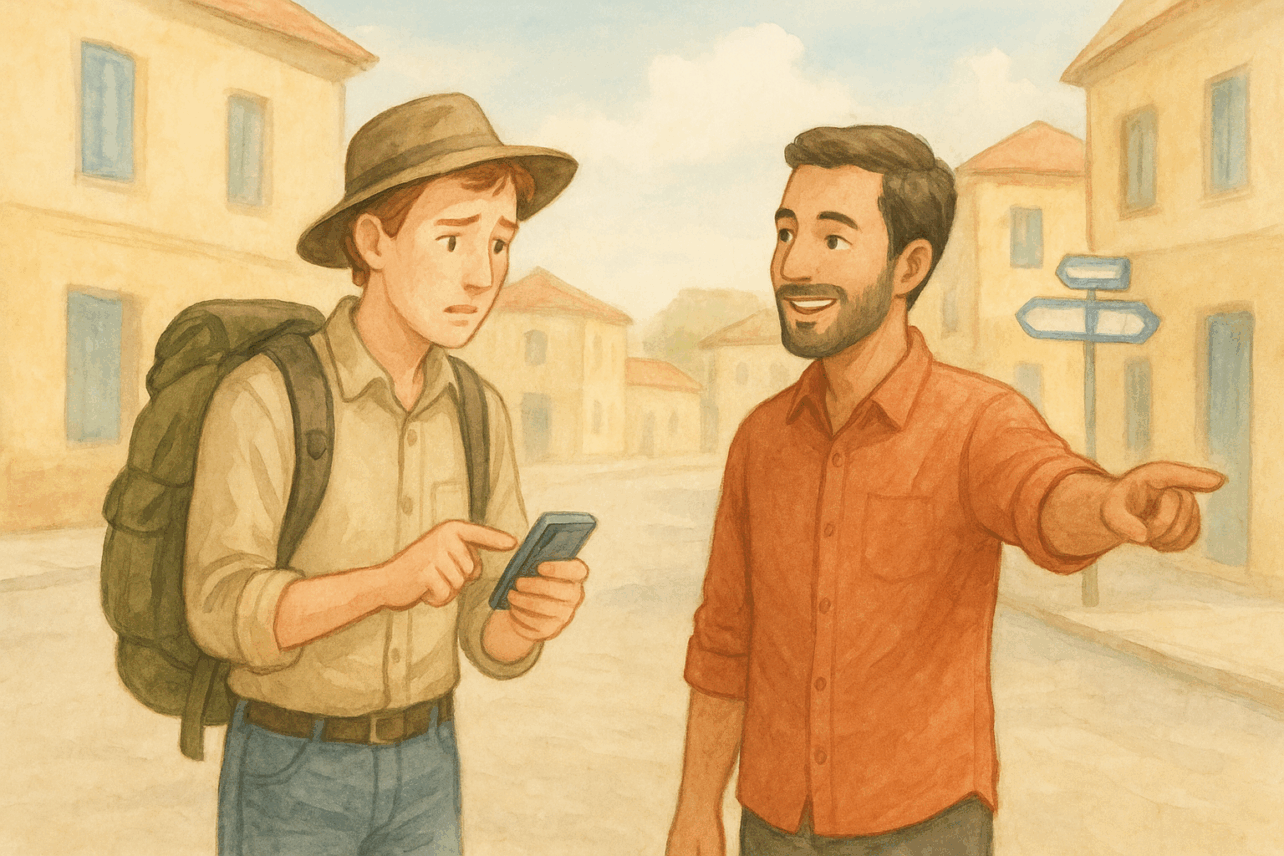
Ntawmhauvntej
Straight ahead / In front Indicating location directly ahead.
2. Conversation
A: Nyob zoo! Kojmusqhov twg?
Nyob zoo! Kojmusqhovtwg?
Hello! Where are you going?
B: Kuvmustomkhw.
Kuvmustomkhw.
I’m going to the market.
A: Txojkevmustomkhwnyobqhov twg?
Txojkevmustomkhwnyobqhov twg?
How do I get to the market?
B: Losntawmno, tigmusrausablaug.
Losntawmno, tigmusrausablaug.
From here, turn left.
A: Tom qabntawdpuasmusncaj?
Tom qabntawdpuasmusncaj?
After that, do I go straight?
B: Yog, musncaj, cestigmusrausabxis.
Yog, musncaj, cestigmusrausabxis.
Yes, go straight, then turn right.
A: Lubkhwnyobkiagqhov twg?
Lubkhwnyobkiagqhov twg?
Where exactly is the market?
B: Nyobkiagntawmhauvntejxwb.
Nyobkiagntawmhauvntejxwb.
It’s right in front of you.
3. Grammar Lesson
Asking directions: Koj mus qhov twg? → “Where are you going?” Answer: Kuv mus [destination].
Asking route: Txoj kev mus [destination] nyob qhov twg? → “How do I get to [destination]?” Answer: Los ntawm no, tig mus rau [left/right/straight] …
Notes: Hmong uses sab laug for left, sab xis for right, and ntawm hauv ntej for straight ahead. Combine directions in order for clarity: start → turn → continue → arrive.